
Author: Marino KG7EMV

  • An Offline Document Vault for Your Go-Kit

    What documents and files would you want with you after a big disaster strikes, when you have no access to your computers or the Internet?

    When I attended the PBEM NET training, I heard the suggestion of having a USB flash drive containing digitized copies of important vital records, passwords, and other important information that could be useful at a time when your computers have been destroyed, and access to the Internet made unavailable.

    I think the same concept can become useful within the context of ARES and amateur radio operations.

    As a member of Multnomah ARES, you may be asked to deploy in locations and situations where you do not have ready access to the documents and tools you need. Why not have those files with you at all times?

    On my laptop, I have a “ham radio USB key” folder structure, under which I organize a variety of sub-folders.

    Under “Personal” I keep digital copies of any IDs and certificates that I may need to present to an Incident Commander when deployed: copies of my FCC licenses, copies of my Multnomah ARES certifications, certificates of completion of FEMA training, etc.

    Under “ARES” I keep copies of the Multnomah ARES Standard Operating Procedure (SOP), ICS forms, copies of Net scripts/preambles, and copies of the regional ARES frequency template.

    Under “PBEM” I keep documentation regarding the NET program, including the new “Section 900” detailing the practices of AROs within the PBEM NET guidance.

    Under “Manuals” I keep PDF copies of the user’s manual for all the equipment (transceivers, tuners, analyzers) that I personally own, I may have to operate at a Fire Station or Served Agency, and any popular product that I may encounter during emergency operations.

    Under “Reference” I have several of the ARRL published band charts, a digital copy of the ARRL Handbook (when you buy a copy of the book you get a CD-ROM with the PDF files) and the Antenna Book.

    Under “Software” I keep binary installers for popular ham radio software I may need, including RMS Express (to operate Winlink), CHIRP (to program radios), LibreOffice (to interoperate with Word and Excel documents), a PDF reader, 7-zip (to expand ZIP archives), MSSSTV, Easypal, my favorite text editor, FLdigi, and so on.

    Every time I find something new that I consider useful, I add it to this folder structure then, two or three times a year, I perform a sweeping review of the files in it. I may delete some information that has become obsolete, refresh the SOP with the new one, add a new copy of the HRO PDF catalog and delete the old one… you get the drift. When I am done, I take the entire folder structure and copy it to an 8GB USB flash drive that I have with me at all times.
  • Weekly MCARES Net News

    Thank you everybody for participating in our Weekly MCARES Wednesday Net. The 2015 numbers are in and we got just shy of one thousand checkins to the Net! The tallied total for 2015 is 972 checkins; an average of 18 per week.

    Here are the most dedicated MCARES net participants of 2015:

    Name/CallsignCheckins
    Deb KK7DEB51
    Eli W6ELI49
    Dylan W7KEF37
    John KF7ZWX37
    Michael AE7XP36
    Marino KG7EMV35
    Steve W7SRH35
    Lori W3LOR34
    Matthew AF7PV34
    Nate N9VCU34
    Rolf KI4HOP32
    Paul N7NTW31
    Helen KE7SCS29
    Adam KF7LJH28

    Thank you to all who participated and those who took their turns at Net Control!

    We are looking forward to training a new class of operators and getting them certified as Net Control Operators. If you have any questions about this certification please inquire with our new training manager, Steve Konrad AF7DD.

    We have heard your feedback and in 2016 we will shake up things a bit and try to make this Wednesday Net even more informative and interesting for you. While the initial part of the Net will retain the familiar preamble and check-in sections, in the latter part of the Net we will experiment with different formats and bring original content. This may include notable special guests, flash talks (5 minutes max) on subjects of interest and updates from the ECs or other EmComm group representatives. Some ideas are in the works. We cannot do it without your input and feedback! Let us know what you think by sending us email at leadership [at] multnomahares [dot] org.

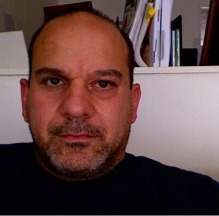
  • Featured Member Profile: Marino KG7EMV

    Hello! My name is Marino. I am 49 years old and live in SE Portland (Woodstock neighborhood) with my wife Laura and our two young men, Bruno and Giulio. I am originally from Italy from a town in the northeast of the country called Treviso, not too far from Venice.

    After completing my studies (Computer Science) and starting work, I moved to the States in 1993, first to Chicago, where my wife worked at the time, and later in the same year to Portland, where her family is originally from. I work in Information Technology as a System Engineer in Wilsonville for a major local company in the electronic design automation business.

    I became interested in Amateur Radio a few years ago after a tragedy involving a California family lost in the southern Oregon wilderness. It took me a few years to act upon this emergency preparedness urge and finally in July, 2013 I took and passed the Technician exam.

    From there the path has been the same beaten by many before me: the first trip to the local radio store (aka The Candy Store), the programming of the first HT, finding the frequencies of the local repeaters, listening – lots of listening. And, the experience of the first check-in, the frustration about not being heard and more trips to the store to get a better antenna, more cables, more books and so on.

    Along the way something happened. I met people. Welcoming people; people helping out; and people explaining things and willing to see past the blunders of the new operators.

    With time I realized how much dedication and passion for amateur radio there is in these individuals: the guy who every day orchestrates the rag chew net around commute hours; the folks who every day tirelessly and with infinite patience teach the art of passing formal NTS traffic; the repeater operators; the folks who teach classes in preparation for the license test; the guy who coordinates a VE team; the perpetual tinkerers and experimenters; and those who organize the work of others.

    Despite all the jokes about amateur radio operators being a dying breed, I see encouraging signs all around me. Prompted by renewed focus on emergency preparedness, more people than ever are approaching this hobby. More and more “computer techies” are learning about the world of RF; exploring the airwaves by using a $20 digital TV USB dongle and turning it into an SDR receiver.

    Overall I am very impressed by this Multnomah ARES group. We are a diverse bunch with people of all ages and backgrounds. Our leadership team is strong and I believe our growing ranks are proof of its effectiveness.

    As for myself, this journey of exploration continues. After passing the General test this past January, I have started tuning into the HF bands. Every day I find something new to learn, forcing me to push myself harder and I could not be happier.