Author: Adam KF7LJH

  • Volunteers Needed for Ultra Marathon Events

    Race season is almost here and that means it’s time to dust off your go-bags and charge up your HTs — we’ve got three ultra marathons on the calendar this summer and we need YOUR support!

    This is some of the best real-world training you’ll find anywhere: rugged terrain, dynamic net control operations, and the genuine satisfaction of keeping athletes safe out on the course. Oh, and it’s also just a fantastic time. Here’s what’s on the schedule:

    • Wy’east Wonder — June 28 (Mt. Hood)
    • Mt. Hood Trail Run — July 11 and 12 (Mt. Hood)
    • Volcanic — August 1 and 2 (Mt. St. Helens)

    Sign Up Here!

    Now, for the sharp-eyed observers among you — and let’s be honest, that’s most of this group — yes, you noticed it: the Wy’east Wonder falls on June 28. Field Day. We had absolutely nothing to do with the scheduling. That’s the day the race organizers picked. But honestly? What better way to celebrate Field Day than spending it on Mt. Hood, radio in hand, keeping people safe in the mountains? We’d argue that’s the spirit of Field Day in its purest form.

    Sign up to support one race, two races, or go full rock star and join us for all three. Every position matter and every operator make the operation better.

  • Field Day 2022 – Next Weekend!

    Hello Multnomah County ARES Members,

    This coming weekend is the ARRL Field Day, June 25 and 26!! If you’re not familiar with Field Day, it’s one of the most fun ARRL events of the year. Hams all over the world gather outdoors to participate in a fun HF/VHF contest, hang out with other hams, and perform outreach to the public. For many of us, it was the first time we ever got on the air!

    This year, Multnomah ARES will be joining the Hoodview Amateur Radio Club‘s annual Field Day celebration. They will be at Larch Mountain again this year and we’re looking forward to blasting some radio waves with them up there. If you haven’t been to Larch Mountain, it’s beautiful. The Sherrard Point trail is short but fun, and leads to a pretty amazing viewpoint.

    Here’s a google maps link to Larch Mountain with directions. We’ll be set up in the parking lot outside the Larch Mountain Trail trailhead.

    The Field Day contest starts at 11 AM, Saturday the 25th and runs through 11 AM Sunday the 26th. The MCARES trailer will be arriving on site around 9:00 AM on the 25th and will remain there through the event. If you’d like to get some great field experience and help the Hoodview team raise a few antennas, plan to arrive around 9 AM. All are welcome – and encouraged – to come operate, make some contacts, and hang out!

    We’re having a Potluck Saturday night!!! Deb will be bringing her incredible Field Day Spaghetti – a perennial favorite! Please feel free to bring a dish and enjoy some great company and a pleasant evening.

    We hope you can find the time to visit next weekend even if it’s just for a little bit during the day. It’s been too long since we’ve been able to meet up face to face (in small groups). If you have any questions, please don’t hesitate to reach out.

    Thank you! Have a great week!

    Deb KK7DEB, Adam KF7LJH, and Carrie K7CAC

  • Silent Key: John Bartlett KF7ZWX

    Electrical Father of the Trailer

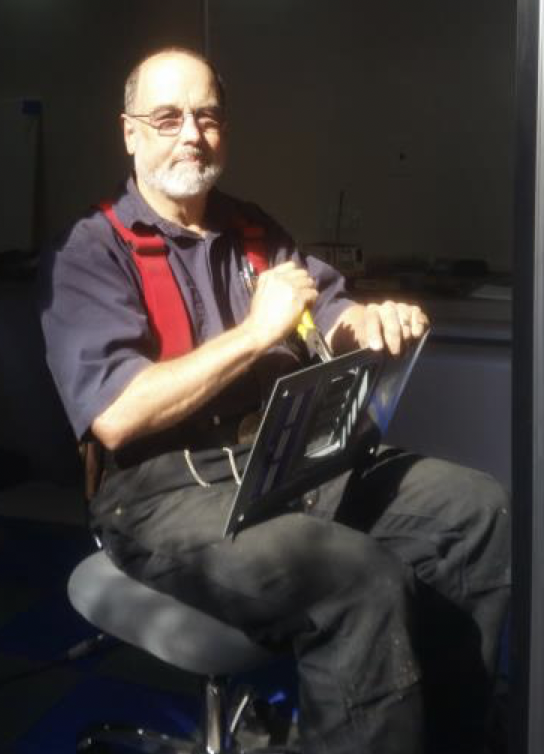
    It’s with both joy and sadness that we remember John Bartlett, KF7ZWX, who passed on November 25th. From the first time he pulled up to a meeting with his antenna porcupine search and rescue truck, John made a huge impact on Multnomah County ARES over the 7 plus years of his membership. An electrician by trade, John was a man of many, many talents. He was an electronics engineer, a machinist, a programmer, and an educator. A carpenter, patent holder, father, a counselor, and a friend.

    Warm and generous of spirit, John was one of our best Elmers and was able to illuminate the complexities of radio and electronics with a quiet passion that was welcoming and infectious. His soldering classes were stuff of legend – who has eight soldering irons and all the accessories handy to set up at a moment’s notice? Two hours with John and you were soldering like you’d been at it for a decade. He could de-solder a feedline connector in seconds; it was like watching a magic trick.

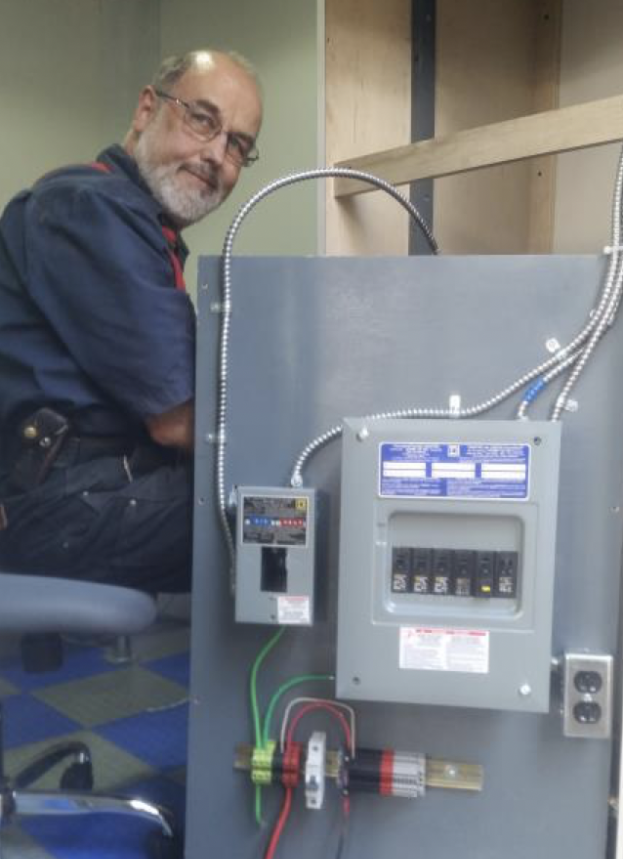
    In one of his most incredible efforts for ARES, John put in hundreds of hours over months designing and installing – and personally donating much of – the entire electrical system for the ARES Communications Trailer. It’s an amazing, professional quality system that is simultaneously complex and simple, a truly inspired design that has been replicated in similar units up and down the west coast. It took an incredible amount of time and effort – John was one of the most generous men. Ever.

    On the Mike Team, he was an ocean of Zen in the middle of the chaos of a drill. The man was unflappable and always smiling, first to volunteer and last to leave, every time.

    We will miss him, and his dog, Puggles, deeply, and send our condolences and warmest thoughts to Katherine KQ7TBR and his family.

  • 2017 HF Campout Recap

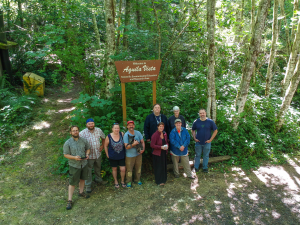
    The 2017 HF Campout was at the Aquila Vista campground this year, part of the Molalla River Recreation Area – a mix of impressive river vistas and comforting NW forest canopy. It was also pleasantly bear-free. Thank you Robert WX5TEX for all your work planning the trip and Deb KK7DEB for bringing pretty much everything.

    More than 15 hams participated this year and we had at least seven different HF setups roll through the camp over the weekend. Wire dipoles, stick dipoles and magnetic loop antennas we’re all setup at various times as were a few Icom and Yaesu radios. But we should have called this the Elecraft-sponsored ARES HF Campout this year. The entire model line made an appearance at one point, including most of the accessories, between all the various radio kits on display. It was impressive; those radios are amazing!

    The food, often the best part of the whole campout, was great again this year and there was enough space for the number of campers we had. Getting the trailer up to the site was a real challenge though. The last mile to the camp was double track at best and laughably steep in sections. We weren’t sure how it was going to go, but not only did Deb and her sturdy new truck easily pull the ARES trailer up this 4×4 only road, the trailer’s interior didn’t shake apart either. It was a rugged field test of the trailer and it was up to the task.

    We’re already thinking about next year’s HF Campout which will be at Champoeg State Park. This park is accessible by any vehicle. We will be looking at a group site that has RV sites, electricity, flush toilets and showers. It will be either the last weekend in July or the first weekend in August. Dates will be confirmed this fall.

  • Send an ICS 213 Form with Your Phone!

    Did you know you could send a digital ICS213, and a large number of other forms or text, with just your Android phone and a radio? You can, and it’s super easy to do! The hardest part, really, is getting the software onto your phone.

    With the normal desktop version of FLDIGI, you can send nicely formatted forms using FLMSG. This is something that Matthew AF7PV has been exploring on the monthly digital ARES net and it works really well. It works great using a Signalink and even works well just holding the radio’s hand mic up to the speakers of the laptop, just like the smartphone SSTV apps do.

    The developers of FLDIGI came out with an Android version called AndFLmsg. You can’t get it from the Google Play store, but you can download it and install it directly to your phone from the Sourceforge website where you download the normal desktop version.

    The mobile app strips out a lot of the desktop FLDigi application, leaving mostly just the NBEMs messaging forms and a few of the popular modes. What’s great about the mobile version is that creating and managing messages looks just like email in the app. Honestly, it’s much easier to use than that desktop version.

    At the last monthly digital meeting I was able to both transmit and receive several FLDIGI form-based messages just by acoustic coupling. So even if you don’t have a big mobile radio, a laptop and a fancy Signalink digital interface, you can still participate in the monthly digital net just by putting your phone up to your radio’s speaker. We think his might have a lot of value for ARES operations, especially for something like the mass delivery of update messages or something along those lines.

    Although sadly there is no iOS version of this app for apple devices, you can get the desktop version of FLDigi for OS X on a Mac, which supports the message and form functions.

    Come help us experiment on Matthew’s Digital Modes Net, the first Tuesday of every month on the 443.300 repeater.

  • Field Day 2016 Recap

    Again this year MCARES joined the Portland Amateur Radio Club (PARC) on Kelly Butte for ARRL Field Day. Field Day is an annual amateur radio event, encouraging emergency communications operations and contesting among amateur radio operators. It is typically the largest single emergency preparedness exercise in the country, with over 30,000 operators participating each year.

    It’s also about outreach and education, letting new hams experience HF contesting, and demonstrating ham radio to the public. But mostly, it’s a fun chance to camp out and play with radios for 24 hours.

    Since the new McARES trailer was going to participate again, Deb KK7DEB and John KF7ZWX did some tree pruning near its traditional parking spot early in the week. Then Pete W7PR spearheaded cleaning the operating area and hanging the dipole antenna support ropes in the trees on Friday. As always, Pete’s use of the pneumatic tennis ball launcher system was a big attraction.

    Antenna hanging started early Saturday morning. Pete is so experienced with hanging these antennas over the years, his team made short work of it. The station in the trailer used the venerable, 25+ year old extended Zepp 192-foot twinlead-fed dipole again this year, which is cut a little longer than a half wave dipole on 75m to increase its directionality. Lee’s CW station used his 20m ZL Special, which is a pair of phased folded dipoles made of 450ohm twinlead set up with directional gain pointing east. In the evenings it’s reconfigured with radials as a top loaded vertical to operate on 80m and 40m. Pete also hoisted an Alpha Delta DC-CC, which is a commercial 10-80m 82-foot dipole, up about 75 feet.

    Deb arrived early with the trailer and had it set up in no time. Its propane fueled generator powered everything in the camp, except the radios, for 24 hours without a hitch – including battery recharging duty.

    The trailer also furnished area WiFi for all the logging stations used by the radio operators. PARC has been using the Field Day edition of a contesting software package called Amateur Contest Log for years, and it has excellent multi-operator network capabilities. Unfortunately, the trailer’s WiFi couldn’t reach even one station, so Brian KE7QPV configured one of his mesh nodes as a repeater. You could get a signal in Salem with his outdoor, high-gain antenna.

    Brian also brought his amazing HSMM Mesh display and did a bunch of experimenting over the evening with all his different hardware configurations. Deb brought the new MCARES solar generator display which was very popular and a big draw with the visitors. Nathan N9VCU grilled up a storm during the day and the evening potluck was delicious!

    With three stations operating over 24 hours, over 300 contacts were made covering 45 states by 21 operators. See the adjacent screenshot of the cool worked-states map.

    Over 70 visitors came by and signed the log, a jump from last year. Amazingly, Adam KF7LJH wasn’t told mysterious secrets by a coyote in his tent this year (the story gets exaggerated with each telling).

    If you couldn’t make it this year, definitely put it on your calendar for next year – it’s the most fun you’ll have with ham radio short of a DX expedition!

  • What is GIS?

    ARES is an emergency communications organization. Traditionally, emcom has been concerned mostly with radio and radio-related procedures, like the mechanics of a directed net or how to professionally move NTS traffic. As we’ve marched into the 21st century, we’ve seen the ARES scope of operations expand to include many different types of technology, like radio-based email systems, APRS, logging software, and mesh networking.

    One exciting technology that has been steadily improving and becoming more accessible is the use of Geographic Information Systems (GIS). GIS has moved out of the computer datacenter in the last decade, riding the coattails of smartphone adoption with “killer” GIS applications like Google Maps, Waze, and geocaching.

    GIS is a broad term that can refer to a number of different technologies, processes, and methods. Of course, we’ve been making maps for thousands of years but map making is only a tiny sliver of what today’s GIS systems can do. GIS applications, like Google Maps and many others, allow users to do far more than just make maps. They are tools that can create interactive queries (user-created searches), analyze spatial information, edit data in maps, and present the results of all these operations.

    It doesn’t take much imagination to see the many ways GIS could be useful in an emergency communications scenario. Maps can be an excellent way to communicate information, status, and action, and being able to quickly produce a map designed for a specific purpose (assigning teams to search grids, for example) is as critical a skill in a disaster as medical training or communications training.

    GIS, like desktop publishing or website design, is both simple and hard to learn. It’s pretty easy to get the hang of the basics but it takes years of training and experience (and a degree of innate talent) to actually be good at it. Luckily for MCARES and other emergency service-type organizations, the emcom needs for GIS content are modest and don’t, generally speaking, require a GIS degree to create.

    GIS has been a critical component to emergency services for decades, which is great because we don’t need to reinvent the wheel again. What we want to do is well trodden ground, in GIS terms, so let’s leverage the work others have done.

    MCARES plans to facilitate basic GIS training to its members over the next 18-24 months with the goal of developing a basic GIS skill set that can be used in a variety of capabilities. MCARES will be using a training program developed for Search and Rescue by a national team of GIS and emergency service professionals. It is a self-paced program that leverages free, industry-standard software and tools.

    And you don’t have to wait for MCARES to get started! Check out www.mapsar.net to review all the materials and start the training program. We hope to have a few GIS intro webinars over the summer and fall, but those will be overviews and only cover the basics. As with any skill, the value you’ll get is proportional to how much time you put into it.

  • Featured Member Profile: Adam KF7LJH

    For me the path down the dark side started with two simultaneous events early in 2010. My grandfather passed and a car ran into my house. Hello? The ramifications of this drama were twofold: I inherited my grandfather’s HF radio and I became very interested in personal preparedness.

    With that motivation, I took the technical and general tests simultaneously and joined the Portland NET program. Quickly I learned about ARES and joined this great organization and have been an active member for about three years now. I’m a real ham. I contest, chase DX, am serious about Field Day and do a lot of experimentation with digital modes like HF Digital Voice, JT65, and FM satellite work. I’ve been very active in setting up local RMS gateways at various locations around town and enjoy all the exciting features of modern APRS functionality. I enjoy learning new things, technical things, but I tend to get bored with something after I’ve figured it out. I’m often reading about the next cool thing it seems like…

    In real life I’m a long time IT manager, a Portland native, and I live in a nice little house in the Alameda neighborhood. All my family is here in town or up the hill in Sandy (a mixed blessing) and I have 12 nieces and nephews, which seems insane when I say it like that. Christmas is complete chaos these days.