Category: Events

  • Annual HF Campout – September 23-25

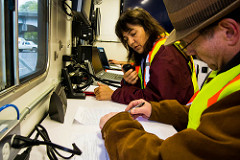
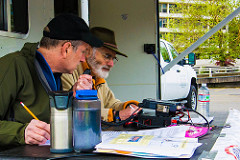
    We are now one month away from our annual HF Campout, to be held at Fort Stevens on the Oregon Coast this year!

    The HF Campout was originally designed to help newer operators get their feet wet in HF radio operation, and to become a certified HF Operator if they desire. This year, our camping trip coincides with the National Parks On The Air event, which we will also be participating in, so all Multnomah County ARES members are welcome, whether you have never operated HF or are a seasoned veteran.

    You do not need to have your General class license to join us. If you currently hold a Technician license, there will be plenty of control operators available to help get you on the air! HF operation is very different than the VHF/UHF operating we do locally, and it’s very addicting!

    Our group is taking over the majority of Loop G At Fort Stevens State Park for this event, and there are quite a few spaces still available on this loop if you would like to join us. The spots are $29 per night, and you’re welcome to join us for both nights or just one.These spots will all accommodate an RV and have electrical hookups. So far, spots G-264 through G-269 have been reserved by our members if you would like to camp near us. There are about a dozen spaces remaining on this loop, so we would encourage you to reserve quickly if you are planning to join us.

    This link should take you to the correct reservation page; just enter the date range (we will be camping September 23 and 24) and select “Loop G”. If you have any questions or would like to join us, please email Robert at RGAnglin [at] gmail [dot] com.

  • Annual HF Campout

    Join the fun. All members and families are welcome at Fort Stevens for our 2nd Annual HF camp out. This year we will be operating as a National Parks on The Air (NPOTA) station to help celebrate the 100th anniversary of our National Parks service. This will be a great event to learn more about HF operations and have some fun and fellowship with other members. Robert WX5TEX is taking reservations for those who would like to get their HF certification; give him a shout at robert6594j [at] gmail [dot] com.

    We have reserved several campsites so if you plan to attend let Robert know so we can make sure there is room for all.

  • Field Day 2016 Recap

    Again this year MCARES joined the Portland Amateur Radio Club (PARC) on Kelly Butte for ARRL Field Day. Field Day is an annual amateur radio event, encouraging emergency communications operations and contesting among amateur radio operators. It is typically the largest single emergency preparedness exercise in the country, with over 30,000 operators participating each year.

    It’s also about outreach and education, letting new hams experience HF contesting, and demonstrating ham radio to the public. But mostly, it’s a fun chance to camp out and play with radios for 24 hours.

    Since the new McARES trailer was going to participate again, Deb KK7DEB and John KF7ZWX did some tree pruning near its traditional parking spot early in the week. Then Pete W7PR spearheaded cleaning the operating area and hanging the dipole antenna support ropes in the trees on Friday. As always, Pete’s use of the pneumatic tennis ball launcher system was a big attraction.

    Antenna hanging started early Saturday morning. Pete is so experienced with hanging these antennas over the years, his team made short work of it. The station in the trailer used the venerable, 25+ year old extended Zepp 192-foot twinlead-fed dipole again this year, which is cut a little longer than a half wave dipole on 75m to increase its directionality. Lee’s CW station used his 20m ZL Special, which is a pair of phased folded dipoles made of 450ohm twinlead set up with directional gain pointing east. In the evenings it’s reconfigured with radials as a top loaded vertical to operate on 80m and 40m. Pete also hoisted an Alpha Delta DC-CC, which is a commercial 10-80m 82-foot dipole, up about 75 feet.

    Deb arrived early with the trailer and had it set up in no time. Its propane fueled generator powered everything in the camp, except the radios, for 24 hours without a hitch – including battery recharging duty.

    The trailer also furnished area WiFi for all the logging stations used by the radio operators. PARC has been using the Field Day edition of a contesting software package called Amateur Contest Log for years, and it has excellent multi-operator network capabilities. Unfortunately, the trailer’s WiFi couldn’t reach even one station, so Brian KE7QPV configured one of his mesh nodes as a repeater. You could get a signal in Salem with his outdoor, high-gain antenna.

    Brian also brought his amazing HSMM Mesh display and did a bunch of experimenting over the evening with all his different hardware configurations. Deb brought the new MCARES solar generator display which was very popular and a big draw with the visitors. Nathan N9VCU grilled up a storm during the day and the evening potluck was delicious!

    With three stations operating over 24 hours, over 300 contacts were made covering 45 states by 21 operators. See the adjacent screenshot of the cool worked-states map.

    Over 70 visitors came by and signed the log, a jump from last year. Amazingly, Adam KF7LJH wasn’t told mysterious secrets by a coyote in his tent this year (the story gets exaggerated with each telling).

    If you couldn’t make it this year, definitely put it on your calendar for next year – it’s the most fun you’ll have with ham radio short of a DX expedition!

  • News from Around the County

    Cascadia Rising is now behind us and a big thanks to all who participated to make this a successful ARES/County/City exercise. Winlink again proved to be an efficient way to move messages to the State OEM and around the county. In all we had 24 of our members active during the three-day exercise and over 90 messages moved from here to there and back again.

    Sea-Pac was June 4 and 5. Several of our members were there to show and tell the mostly completed Mobile Communications Unit (MCU). There was a lot of interest from area hams on the build and design and it is a wonder that Adam KF7LJH still has a voice left as he was a busy fellow giving tours. Brian KE7QPV had a display of a working HSMM Mesh node that also was very popular. Brian will be bringing his display and making an HSMM presentation at our June 23 ARES meeting. Steve W7SRH was also there promoting MCARES and is hopeful that we may add a few new members.

    Field Day is coming! Mark your calendar for June 25 and 26. Multnomah County ARES has been invited to partner with the Portland Amateur Radio Club for field operations at Kelly Butte Park located at SE 103rd Avenue in Portland – turn south from Division and follow the road up the hill to the end. The ARES MCU will be operating there too. You can also join our east county friends at Hoodview Amateur Radio Club at their field operations up at Larch Mountain; follow Historic Columbia Hwy to Larch Mt. Road. Field Day is a great opportunity to meet and visit with other hams, see multi-mode field operations, and get on the air!

  • MCARES Provides Communications for Walk MS Portland event

    It is nearly time once again for the annual Walk MS event in Portland. Multnomah County ARES is honored to have been asked by the National Multiple Sclerosis Society to provide communications support for their event again this year. In years past this event has been well regarded as a training and public service event for the Amateur Radio community.

    The event takes place on Saturday, April 23 from approximately 08:00 to 13:00, and is held in downtown Portland along the Esplanade and in Pioneer Courthouse Square.

    To learn more, or to sign up to help, please visit the Walk MS Portland Communications Volunteer Registration Form.

    UPDATE: Due to amazing volunteer turnout, we have been able to staff all event communications positions much earlier than expected. We have therefore decided to close volunteer registration early, on April 1. This will allow the event communications team more time to finalize position assignments and other details before the event.

  • October 10 Exercise Scaled Back; Marathon and DRT Prevail

    It was decided at the leadership meeting that we will minimize our participation in the statewide exercise on October 10. We will only activate and staff the County ECC for this exercise. The team will handle the Winlink traffic from the State ARES/OEM. The ECC team will be contacted by team leader Deb to staff this.

    The exercise activities requested by the state ARES leadership involve field deployment, which we have done already fairly extensively this year. We feel it is too much to ask of you to devote three weekends in a row to ARES. It is more important and more valuable to your training and to the community that we put our effort into providing communications for the Portland Marathon the week before the exercise and the Disaster Relief Trials the week after.

    The Portland Amateur Radio Club coordinates communications for the Marathon and Multnomah ARES coordinates communications for the Disaster Relief Trials. This is where we need to concentrate our efforts and our volunteer hours in October. Both of these events are fun to work and provide very different communications and radio experiences. We will be using interesting technologies for the DRT with APRS, EasyPal (Photos), HSMM (high-speed data), and field VHF Winlink.

    Please sign up for one or both of these public service events. We need your help!

  • 2015 Portland Disaster Relief Trials Success

    The 2015 Portland Disaster Relief Trials (DRT) event on October 17 was a stunning success, and the DRT event organizers were very pleased with the services provided by Multnomah County ARES! We had a lot of technical challenges in front of us this year, with the inclusion of not one, not two, but THREE digital modes we’ve never used before in an event, and I’m very happy to report that they all worked extremely well!

    Winlink proved to be an efficient means of transmitting rider reports, and supplied the leaderboard volunteers with a constant stream of accurate rider information, while allowing the voice net to concentrate more on tactical traffic.

    EasyPal worked flawlessly, providing the PBEM communications trailer with nearly two dozen high quality still images from the checkpoints. It was very exciting to be able to see, in near real-time, photos of the action out in the field. A special thank you goes out to Adam KF7LJH and Nate N9VCU for making that all happen.

    The Broadband-Hamnet wireless mesh network link between checkpoint 4.1 (Water Feature) and the PBEM communications trailer worked amazingly well, and allowed us to display a real-time video feed from the checkpoint. Many thanks to Michael AE7XP for supplying the hardware and making it all work.

    The event was a huge success not just because we were able to provide the rider reports needed by the DRT staff, but also because we gained valuable experience with digital modes that are new to many of us, and demonstrated their value and potential use in disaster response. Thanks to all the volunteers who made this possible. I hope you will consider volunteering for the DRT Communications Team again next year!

    Brian Cochrane – KE7QPV
    DRT Communications Organizer

  • Field Day 2015

    I have been a licensed ham for nearly twenty years but this is the first year I participated in Field Day. But hey… thanks to the folks at the Portland Amateur Radio Club (PARC), I’m already looking forward to next year.

    I sat down with Pete W7PR, Secretary and Treasurer of PARC, a few days after Field Day to get his perspective on this year’s event. According to Pete, this was the first year MCARES officially partnered with PARC in the Field Day contest. And yes, it is a contest – one of about 19 contests sponsored by the American Radio Relay League (ARRL) each year.

    The real purpose of Field Day, along with being a contest and having fun, is to practice and demonstrate ham radio capabilities for emergency situations. The objective, according to the ARRL web site, is “To work as many stations as possible on any and all amateur bands (some exceptions) and to learn to operate in abnormal situations in less than optimal conditions.” Field Day is regularly scheduled the fourth full weekend in June; it begins at 11:00 AM Saturday and runs through 11:00 AM Sunday, local time.

    Field Day operations were set up at Kelly Butte in Southeast Portland, just off I-205. Pete told me that years back, PARC used to hold their regular meetings up at OMSI when it was at the zoo. This was also the site for Field Day. Along with being a good operating site, it also provided good public exposure for amateur radio.

    For those of you who are history buffs, Kelly Butte is named after pioneer Clinton Kelly who, according to Wikipedia, settled the area east of the Willamette River, in what’s now Southeast Portland, in 1848. It is a natural area, maintained by Portland Parks and Recreation, and covers an area of about 23 acres. Pete told me that there are still descendants of Mr. Kelly in the area, and a couple of years ago one of the family members attended the PARC Field Day. The Butte was once the site of a civil defense emergency operations center, built in 1955. The bunker is no longer in use and has been sealed. In the past the Butte was also home to a sixty-bed municipal hospital, a quarry, and a ten-million gallon water tank, replaced by the Mt. Tabor reservoirs.

    My Field Day actually started on Friday. Along with about a dozen other volunteers we met mid-morning to prepare the site and set the lines which would be used to raise the antennas on Saturday morning. Pete uses what I would refer to as a mini spud-gun. This is an ingenious contraption made out of PVC pipe fitted with some valves and a pressure tank that is charged by a small, portable compressor. Pete uses the gun to launch a tennis ball which is attached to fishing reel and line. The ball is launched over the huge fir trees on the site. Then, stronger support line is attached and is then used to support the actual antennas. My hat is off to Pete and the rest of the antenna crew. Knowing where to locate the antenna and stringing it up is as much art as science.

    On Field Day Saturday morning I met MCARES members John K7TY and Ross KD7TUR at the “Texas Hydro-Park” near Multnomah Village here in Portland. It is close to where I live and at an elevation of about 600 ft. The three of us set up QRP stations and operated for several hours with only minimal success. John and Ross both used Elecraft units and I set up a Yaesu FT-817. By the way, John biked all the way from his home in North Portland pulling his gear in a mini bike trailer. That’s dedication to both ham radio and biking.

    Saturday afternoon, I made my way over to Kelly Butte to join the PARC/MCARES Field Day operations. I partnered with several other operators using an Elecraft HF unit owned by Adam KF7LJH, on 20 and 80 meters. We took turns at the radio and entering contacts in the logging software. Sorting out some of those pile-ups was a real challenge. But when you finally make the contact… that’s a great feeling. For those who haven’t experienced it, it’s quite addictive. I remember thinking, “I’ve got to get this one.”

    At the PARC Field Day site, we operated as W7LT, category 4A (four stations, club, battery power), Oregon section. This category limits transmit power to 5 watts. One of the reasons to operate low power (QRP) according to Pete, is that each contact is worth more points than if you were operating at, say, 100 watts.

    MCARES played a prominent role in this year’s event by locating the comms trailer on the site. Numerous MCARES members participated on air or visited the site. Many contributed food and beverages for the event. I especially enjoyed the fried chicken!

    According to Pete, Lea AL7W, who was essentially the only CW operator, made approximately 175 contacts on 20, 40, and 80 meters. Lea was operating a vintage ICOM radio. Other equipment used included the Elecraft K3, an ICOM 7100, and a Yaesu FT-857. The antenna included a ZL special wire beam, a 40 meter horizontal loop, and an 80 meter dipole as well as a Buddipole. Official results from the contest are still being tabulated and will be published in the December issue of QST Magazine.

    I asked Pete how this year compared to previous PARC Field Day events. He indicated that he thought attendance was up, in part due to the joint participation of PARC and MCARES. He anticipated that the number of contacts would be about average compared to previous years and that PARC would once again place in the top five finishers in the Field Day contest, nation-wide.

    In years past, Pete indicated that the club had erected towers, with beams and rotators making set-up more complicated and frankly more dangerous. Safety is much less of an issue with the all-wire antenna set-up. The Butte has plenty of space for other antenna set-ups. PARC has more types of antennas available in the tool bag and Pete said if there is interest, the club would be willing help with the construction of other antenna types if they are not currently available. He is hopeful that future events will include satellite communications with other ground stations via orbiting satellites and with the International Space Station. Satellite contacts garner big points! Pete said in coming years he would like to see more CW operators, for two reasons. First, it would help to keep the discipline alive, and second, there is also a point multiplier when CW contacts are made, helping to increase the overall contest score.

    I left Kelly Butte at about 10:30 PM Saturday evening and returned at about 9 AM Sunday. A number of PARC and MCARES members staffed the stations all night. The event concluded at 11 AM And then it was time to take down the antennas, stow the pop-up canopies and button up the MCARES trailer. As you can imagine, this entails a lot of work but thanks to the efforts of the many volunteers who helped, the take-down seemed to go smoothly.

    I want to say thanks to those seasoned hams who helped me enjoy my first Field Day. I appreciated the opportunity to see how the event is set up and to experience the real satisfaction of making those contacts, helping to rack-up what will hopefully be sufficient points to once again place PARC in the top Field Day contest finishers in the country!

  • Radio Camp Out

    Have you been wishing Multnomah ARES would have a fun family social event? Have you been wanting to get your feet wet in HF operation, but don’t know where to start? Are you experienced with HF operation and ready to get your HF Operator Certification? Have you actually tried using your go-kit? On August 15 and 16, Multnomah ARES is holding our first (hopefully, annual) Radio Camp Out!

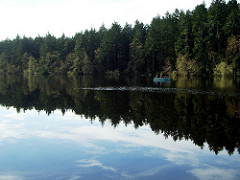
    Nestled among the Douglas fir trees and flanked by the Zig Zag River, the Tollgate Campground is an easy drive, less than an hour east of Portland on Highway 26, just two miles outside of Rhododendron. We have reserved a couple of tent campsites for those who would like to make the most of the weekend and stay overnight Saturday night.

    There is a $5 day-use parking fee, or $8 to stay overnight. Also be aware that there are no utilities available at this campground, but there is a beautiful river!

    We will be taking our new ARES trailer up into the Mount Hood Wilderness to test its capabilities as a remote communications station. In addition to the trailer, we will have a couple of portable HF stations set up to provide HF training and certification for those who want it. We will hold training sessions on the afternoon of Saturday, August 15 and on the morning of Sunday, August 16. We will also set up a 2 meter base station so hikers can stay in touch on their HTs.

    Space is limited, so if you would like to attend either one of the training sessions or camp out with us overnight, please reserve your spot soon by emailing Robert WX5TEX at RGAnglin [at] gmail [dot] com.

    We think this will be a super fun weekend and hope you will make the short trip to join us! Not only will you gain valuable experience in HF operation, but this will also be a great opportunity to test out your go-kit and have some fun in the woods with fellow ARES campers!

  • 2015 EC’s Cup

    It is time once again to determine who is the best radio operator in Multnomah County. Brian KE7QPV is the reigning EC’s Cup Champion, so let’s all get ready to knock him off his perch. Last year we had a VHF Contest, this year I want us to get up and moving to burn off some Holiday cookies.

    On Saturday, January 3, we will conduct a geo-cache man-hunt throughout inner SE Portland for our illustrious EC. Details are in the MCARES 2015 EC’s Cup Drill Guide. All AROs are welcome. You’ll need a 2m radio and GPS (phone will do fine). This will be an active event, catch the EC if you can.

    In addition, we are still collecting for the Multnomah trailer project. Although a donation is not required to participate, it would certainly be accepted. Details on that project can be found here.

    The idea behind this event is to buff our map reading and tactical radio skills. This is a great opportunity for NET folks to try to claim operator supremacy, so I’m going to need ARES to represent! As usual, engraved swag to the winner courtesy of N9VCU.

    Look forward to seeing you there,

    Nathan Hersey, N9VCU
    Multnomah County ARES Emergency Coordinator